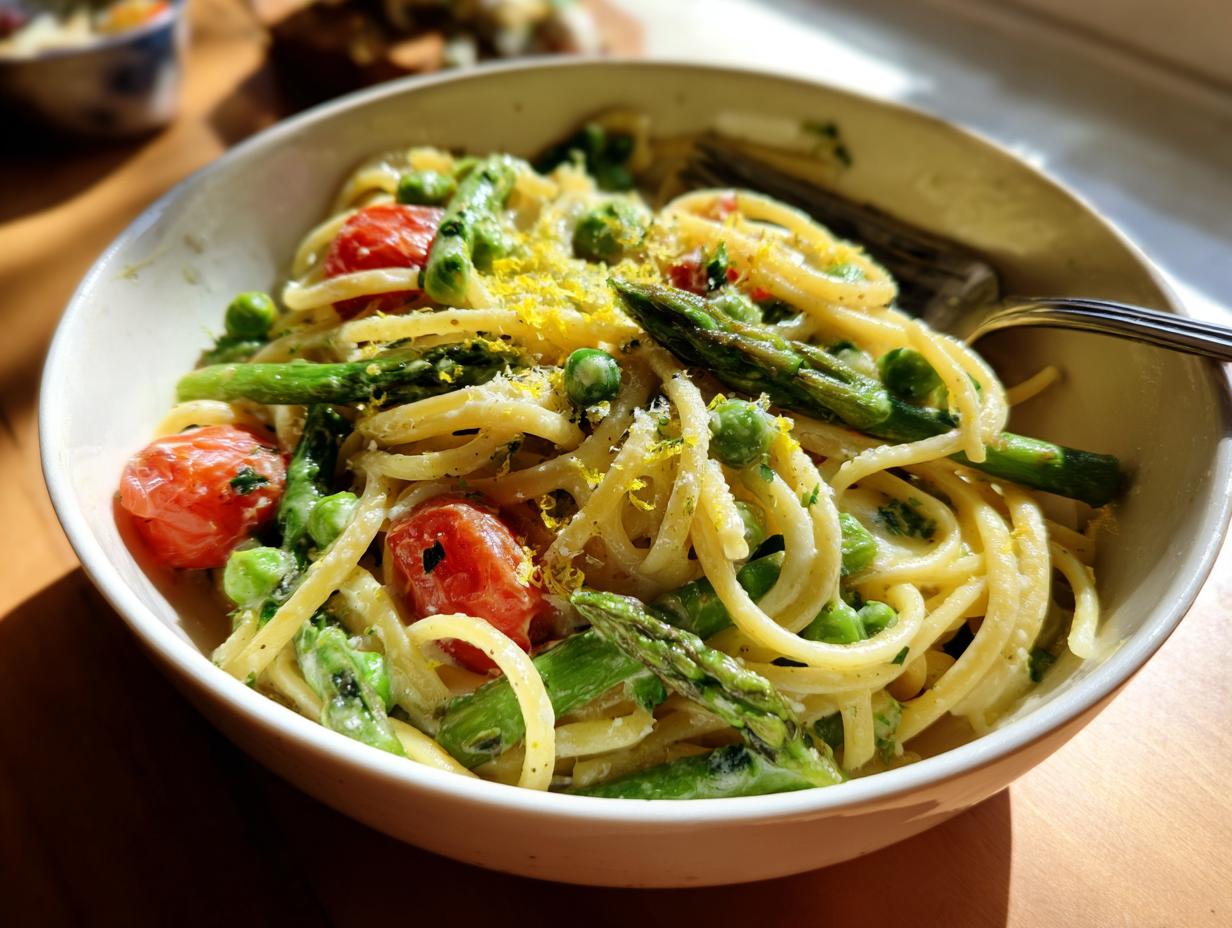
There’s something magical about spring vegetables that makes me giddy as a kid in a candy store. When those first tender asparagus spears and sweet peas hit the farmers market, I know it’s time for my favorite Spring Vegetarian Pasta Primavera. This dish perfectly captures that fresh, vibrant energy of the season – light enough to feel springy but hearty enough to satisfy. I still remember the first time I made this for my book club last April – the way the lemon zest brightened up the creamy sauce had everyone asking for seconds. It’s become my go-to spring vegetarian dinner when I want something quick, colorful, and packed with that unmistakable seasonal flavor.
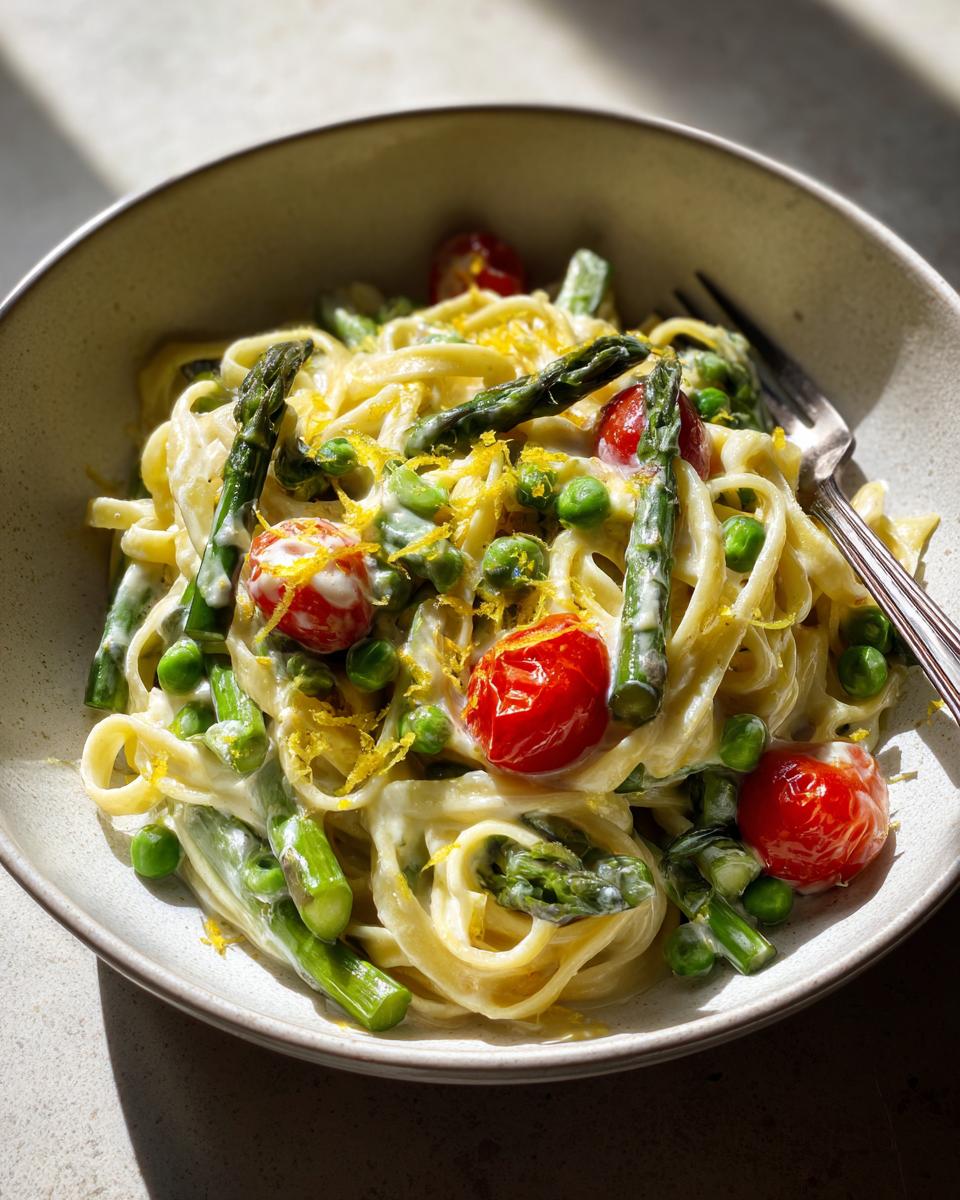
Why You’ll Love This Spring Vegetarian Dinner
Oh, where do I even begin? This pasta primavera is my absolute favorite way to celebrate spring produce, and here’s why you’ll adore it too:
- Weeknight lifesaver: Ready in about 30 minutes flat – faster than takeout! I’ve made this after long work days when I’m starving and it never disappoints.
- Seasonal superstar: Those crisp asparagus spears and sweet peas? They’re like little bursts of spring in every bite. I wait all year for veggies this good.
- Creamy but not heavy: The sauce coats everything beautifully without weighing you down. My secret? Just enough parmesan to make it rich, but plenty of lemon zest to keep it bright.
- Endlessly adaptable: No peas? Toss in some zucchini. Out of asparagus? Green beans work great too. It’s the perfect clean-out-the-fridge meal.
Trust me, once you try this recipe, it’ll become your springtime staple too!
Ingredients for Spring Vegetarian Pasta Primavera
Gathering the right ingredients is half the magic of this dish! I’ve learned through trial and error that quality matters here – fresh spring veggies make all the difference. Let me walk you through exactly what you’ll need to make this pasta primavera sing.
For the Pasta
Keep it simple here – we want the vegetables to shine!
- 12 oz fettuccine: My absolute favorite for this dish – those wide noodles hold onto the creamy sauce beautifully. But honestly, any pasta shape works if that’s what you’ve got.
- 1 tbsp olive oil: Just enough to keep the pasta from sticking together while we prep the veggies.
- 1 tsp salt: For the pasta water – trust me, it makes a difference in flavoring the noodles!
For the Vegetables
This is where the spring magic happens! Here’s what you’ll need:
- 1 cup asparagus, cut into 1-inch pieces: Look for bright green, firm spears – they should snap when you bend them.
- 1 cup peas: Fresh are amazing if you can find them, but frozen work perfectly fine too (no need to thaw!).
- 1 cup cherry tomatoes, halved: I like to use mixed colors for extra visual pop.
- ½ cup heavy cream: Makes the sauce luxuriously creamy without being too heavy.
- ¼ cup grated parmesan cheese: The good stuff please – it melts so much better than the pre-shredded kind.
- 1 tbsp lemon zest: My secret weapon! Freshly zested makes all the difference.
See? Nothing too fancy, just fresh, simple ingredients that let spring’s natural flavors shine through!
How to Make Spring Vegetarian Pasta Primavera
Alright, let’s get cooking! This spring vegetarian pasta comes together faster than you can say « primavera, » but I’ve got some tricks to make sure it turns out perfect every time. Follow my lead and you’ll have a restaurant-worthy dish in no time.
Step 1: First things first – get that pasta water boiling! Fill your largest pot with water (I always underestimate how much I need), add a generous pinch of salt – it should taste like the sea – and bring it to a rolling boil. While that’s heating up, I prep my veggies. Drop in the fettuccine and set your timer for 1 minute less than the package says – we want it al dente since it’ll cook a bit more later.
Step 2: Now for the fun part – the veggies! Heat your olive oil in a large skillet over medium heat. When it shimmers, toss in those beautiful asparagus pieces and peas. Listen for that satisfying sizzle! Sauté them for about 3-4 minutes, just until the asparagus turns bright green and gets tender-crisp. Oh, and don’t forget to stir occasionally – burnt asparagus is nobody’s friend.
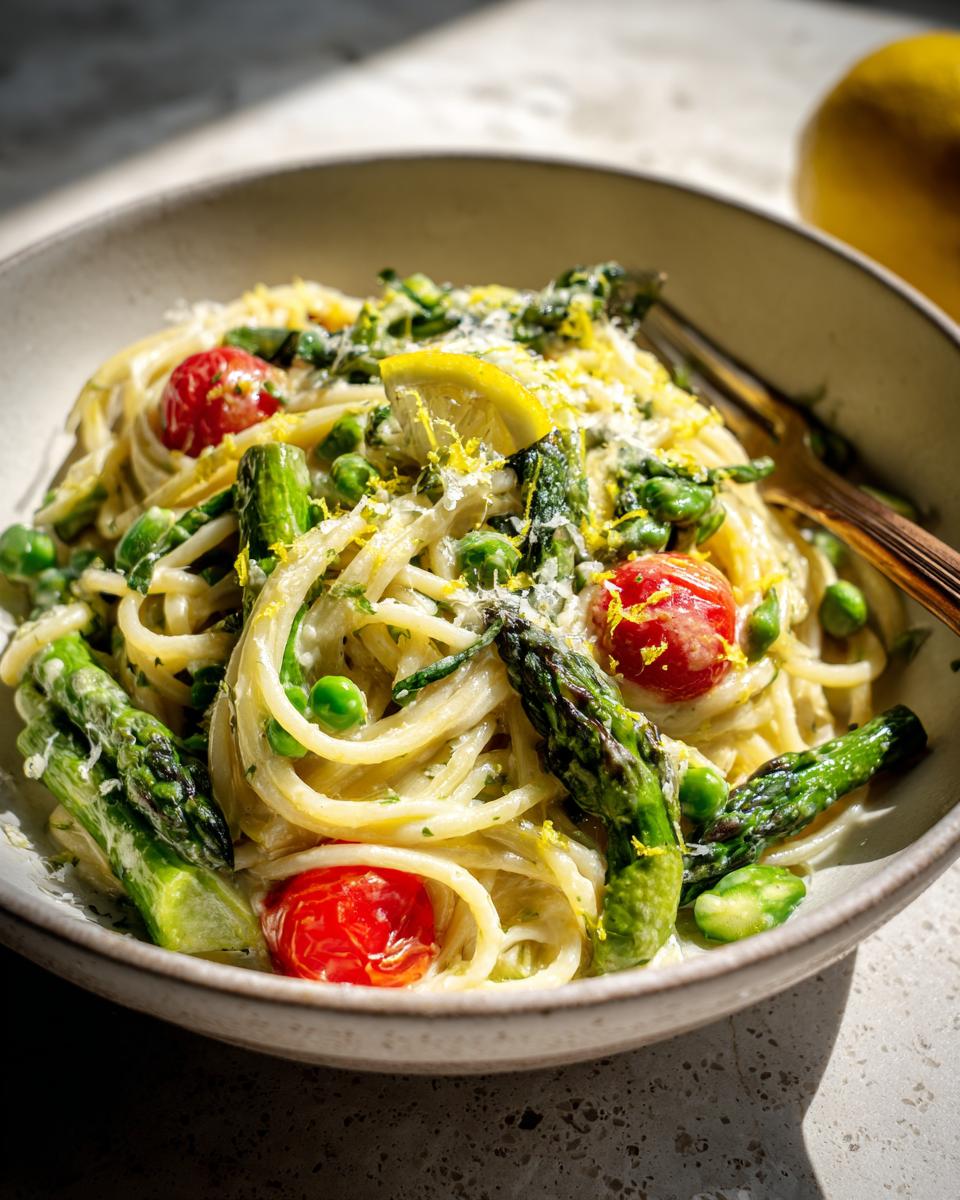
Step 3: Add those halved cherry tomatoes next – they’ll soften just enough in about 2 minutes to release their juices but still keep their shape. This is when the magic starts happening – the colors, the smells… pure springtime in a pan!
Step 4: Here’s my favorite part – the sauce! Pour in the heavy cream and sprinkle the parmesan cheese right over those gorgeous veggies. Stir gently as the cheese melts into the cream, creating the most luscious sauce. Pro tip: reserve about ½ cup of that starchy pasta water before draining – it’s liquid gold for adjusting the sauce consistency!
Final Step: Drain your pasta (don’t rinse it!) and add it straight to the skillet. Toss everything together until every noodle is coated in that creamy, veggie-packed sauce. If it looks too thick, splash in some of that reserved pasta water a tablespoon at a time until it’s just right. Finish with a generous sprinkle of lemon zest – that bright citrusy pop takes it from good to « oh my goodness! »
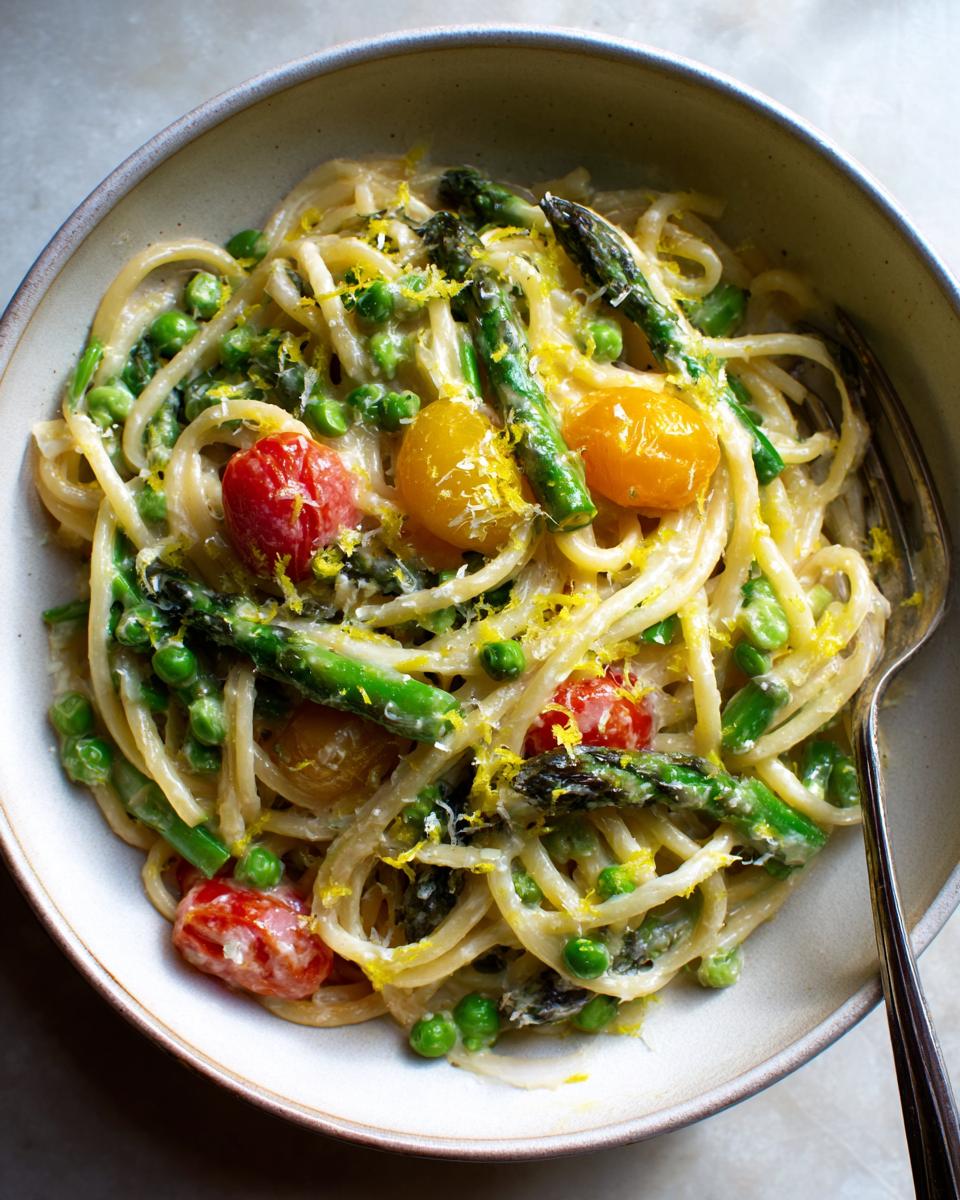
And there you have it – spring on a plate in about 20 minutes! The colors alone will make you happy, but wait until you taste it. Creamy, fresh, and bursting with seasonal flavors. Now go grab a fork and dig in!
Tips for Perfect Spring Vegetarian Dinners
After making this pasta primavera more times than I can count (my friends keep requesting it!), I’ve picked up some tricks that take it from good to « can I have thirds? » good. Here are my absolute must-know tips for spring vegetarian dinners that’ll make you look like a pro:
Blanch those veggies first: Want your asparagus perfectly crisp-tender? Drop it in boiling water for just 60 seconds before sautéing. I keep a bowl of ice water nearby to shock them – stops the cooking right where you want it. Works magic with peas too!
Zest is best: That lemon zest isn’t just garnish, friends! I always zest my lemons right before using – the oils are brightest then. And don’t skimp – I often add extra because that citrusy punch cuts through the creaminess so beautifully.
Lighten it up: Watching calories? Swap the heavy cream for full-fat Greek yogurt (trust me, non-fat gets weird). Heat it gently though – stir it in at the very end off the heat to prevent curdling. My yoga buddy swears by this version!
Pasta water gold: Never, ever dump that starchy pasta water! I keep a mug by the stove to reserve some. Just a splash transforms a thick sauce into silky perfection. It’s my secret weapon for restaurant-quality texture every time.
See? Little things make a big difference. Now go wow your dinner guests – or just treat yourself to something special!
Serving Suggestions for Spring Vegetarian Pasta
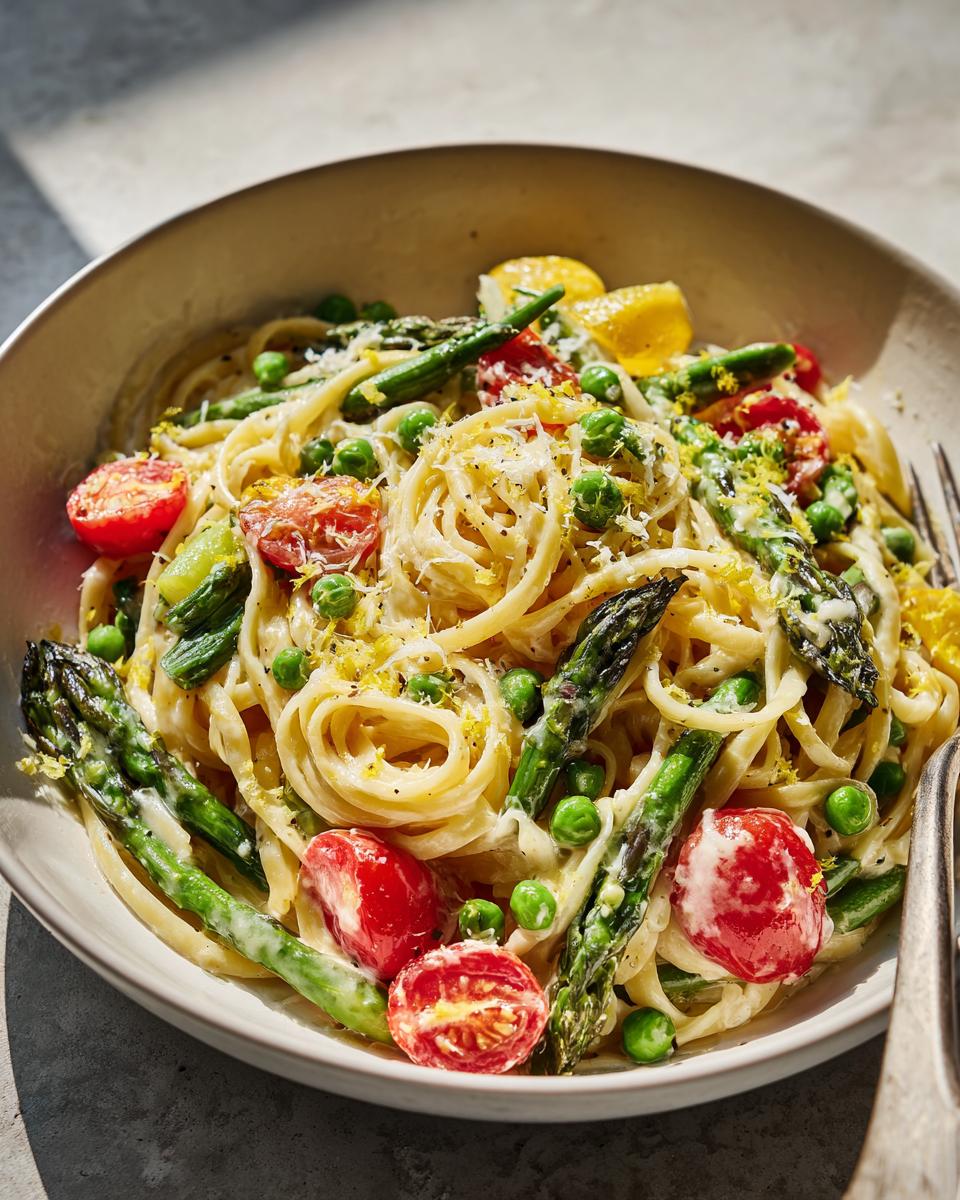
Oh, let me tell you how I love to serve this pasta primavera – it’s practically a springtime celebration on the plate! I always start by piling it high in my favorite pasta bowls (the wide, shallow ones that show off all those pretty colors). A crisp Pinot Grigio pairs perfectly – that bright acidity cuts right through the creamy sauce. If wine’s not your thing, a simple green salad with lemon vinaigrette makes the freshest side. And don’t skimp on the garnishes! I always finish with extra grated parmesan (because cheese) and whatever fresh herbs I’ve got – basil if I’m feeling fancy, or parsley if I want something milder. Sometimes I’ll even add a sprinkle of red pepper flakes for those who like a little kick. Trust me, it’s all about making it look as joyful as it tastes!
Storage and Reheating Instructions
Now, I know this pasta primavera is so delicious you might not have leftovers – but if you do, here’s how to keep them tasting fresh! I always store mine in an airtight container in the fridge, where it stays perfect for up to 3 days. When reheating, add just a splash of water or cream to the pan – this brings back that silky sauce texture. Microwave works too in a pinch, but cover it with a damp paper towel to lock in moisture. Honestly, I sometimes think it tastes even better the next day after all those flavors have mingled!
Nutritional Information
Now, I’m no nutritionist, but I can tell you this spring vegetarian pasta packs plenty of goodness from all those fresh veggies! Keep in mind these numbers are just estimates – they’ll change based on your exact ingredients and brands. The asparagus and peas bring vitamins and fiber, while the parmesan adds protein and calcium. That lemon zest? Pure vitamin C magic! Just remember – cooking should be about joy first, numbers second. As my grandma always said, « A happy meal feeds more than just the body! »
Frequently Asked Questions
Can I use gluten-free pasta?
Absolutely! I’ve made this with gluten-free fettuccine many times when cooking for friends with dietary needs. Just be sure to cook it al dente – gluten-free pasta can get mushy fast. My favorite trick? Reserve extra pasta water since GF noodles often need more liquid in the sauce. The texture will be slightly different, but all those spring flavors still shine through beautifully!
What other spring vegetables work in this recipe?
Oh, the possibilities! This recipe is like a blank canvas for spring produce. I’ve swapped in zucchini ribbons, baby spinach, or even thinly sliced fennel when asparagus wasn’t available. Fresh green beans or sugar snap peas make fantastic additions too. Just remember – quick-cooking veggies work best since we’re not roasting them. My rule of thumb? If it’s bright and fresh at the farmers market, it’ll probably be delicious in here!
How can I make this pasta primavera vegan?
Easy peasy! I’ve veganized this for my plant-based pals by using nutritional yeast instead of parmesan and coconut cream instead of dairy. The sauce won’t be quite as rich, but it’s still delicious! For extra umami, I’ll sometimes sauté mushrooms with the veggies. And that lemon zest? Still the perfect vegan-friendly flavor booster. Just be sure to check your pasta ingredients too – some brands contain eggs.
Can I prep any components ahead?
You bet! I often prep veggies the night before when hosting dinner parties. Keep them in separate containers in the fridge – the tomatoes especially will get soggy if mixed too soon. The lemon zest can be grated a day ahead too (store it in a tiny sealed container). But trust me, cooking the pasta fresh makes all the difference – nobody likes reheated noodles!
What if my sauce turns out too thin or thick?
Don’t panic – I’ve been there! If it’s too thin, let it simmer another minute or two while stirring. Too thick? That reserved pasta water is your best friend – add it a tablespoon at a time until perfect. Remember, the sauce will thicken as it cools slightly. My grandma’s wisdom? « Better slightly loose than gluey! » Words to live by in the kitchen.
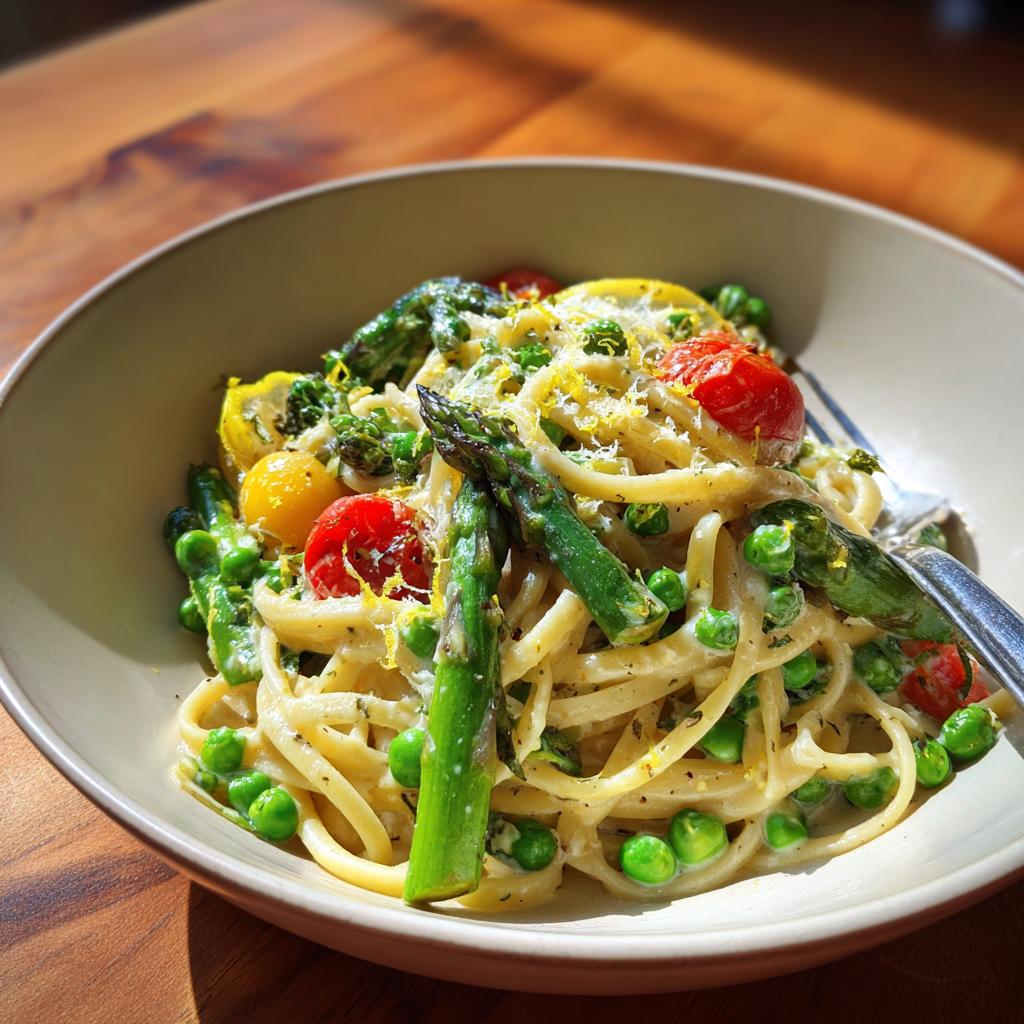
Spring Vegetarian Pasta Primavera
Ingrédients
Equipment
Method
- Bring a large pot of salted water to a boil. Cook the fettuccine according to package instructions until al dente. Drain and set aside.
- Heat olive oil in a large skillet over medium heat. Add asparagus and peas, sautéing for 3-4 minutes until tender.
- Add cherry tomatoes and cook for another 2 minutes. Stir in heavy cream and parmesan cheese until well combined.
- Toss the cooked pasta with the vegetable mixture. Garnish with lemon zest before serving.